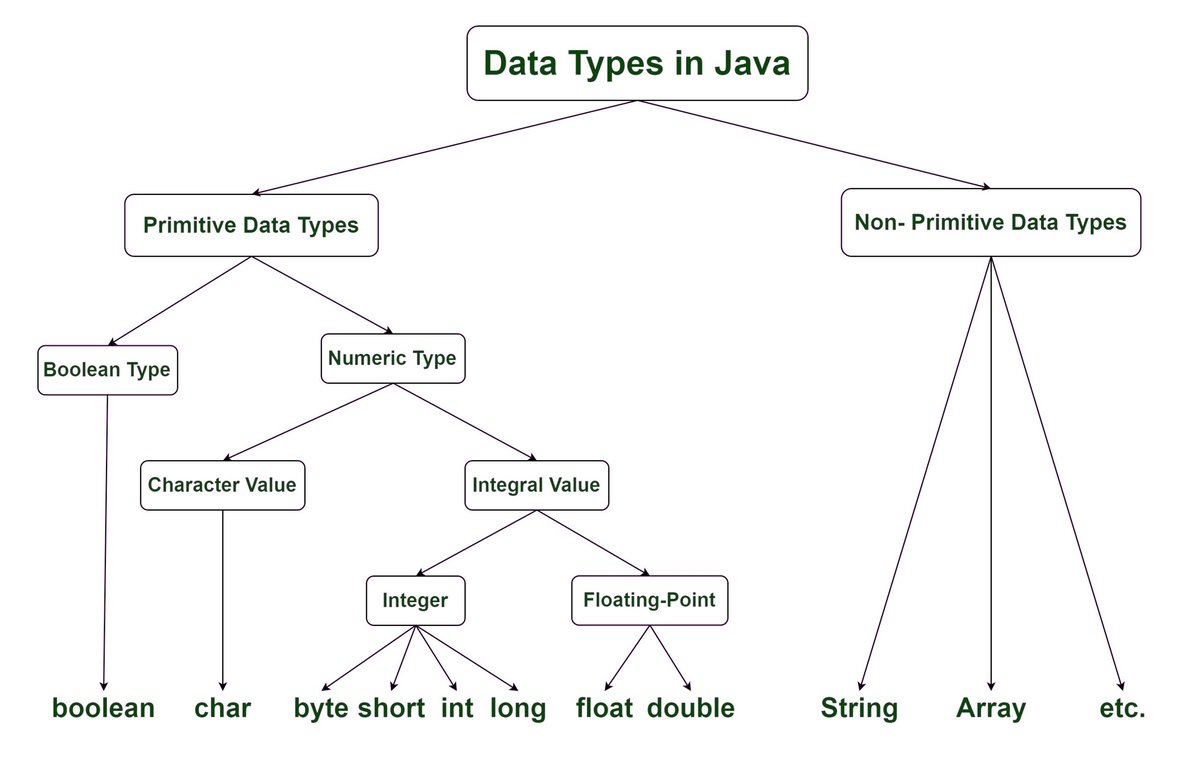
In the dynamic world of software, the ability to introduce unpredictability isn't just a quirky feature; it's a fundamental requirement. From simulating complex scientific phenomena to ensuring the integrity of online security protocols, the need for Generating Random Booleans, Longs, and Other Data Types in Java touches nearly every facet of modern programming. Without it, our games would be predictable, our encryption breakable, and our simulations unrealistic.
Think of it: the flip of a coin in a game, a secure one-time password (OTP), or the shuffle of a playlist—all rely on a sprinkle of randomness. In Java, you're equipped with a robust toolkit to achieve just that, whether you need a simple true/false, a massive 64-bit integer, or something cryptographically bulletproof. Let's dive into Java's powerful mechanisms for bringing controlled chaos to your code.
At a Glance: Your Randomness Roadmap
java.util.Random: The general-purpose choice for most common random number needs. Fast, flexible, and easy to use.Math.random(): A quick, static method for generating adoublebetween 0.0 (inclusive) and 1.0 (exclusive). Good for simple, single-line needs.ThreadLocalRandom: Your go-to for high-performance, concurrent applications. Reduces contention in multi-threaded environments.Random.ints()(Java 8+): For when you need streams of random numbers, integrating seamlessly with Java's Stream API.SecureRandom: The heavyweight champion for security-sensitive applications like cryptography or generating secure tokens.- Ranges Made Easy: Learn the simple formulas to constrain your random numbers to any
[min, max]range.
The Unseen Hand: Why Randomness Matters in Software
The concept of "randomness" has fascinated thinkers for centuries, and its application in computing dates back to pioneers like John von Neumann, who introduced early methods for pseudo-random number generation in 1946. Today, the applications are boundless:
- Simulations and Modeling: Accurately mimicking real-world processes, from weather patterns to stock market fluctuations.
- Gaming: Ensuring unpredictable enemy AI, loot drops, card shuffles, and level generation.
- Security: Crafting robust encryption keys, unique session IDs, and one-time passwords (OTPs).
- Testing: Generating diverse test data to thoroughly validate software.
- Statistical Analysis: Creating samples or noise for data processing tasks.
However, it's crucial to understand that computers, being deterministic machines, can't truly generate "random" numbers. Instead, they produce pseudo-random numbers—sequences that appear random but are generated by an algorithm from an initial "seed" value. For most applications, these are perfectly sufficient. But for critical security, a higher standard is required, leading us to different tools in Java's arsenal.
Java's Toolkit for Randomness: A Closer Look
Java provides a diverse set of classes and methods, each tailored for specific scenarios. Understanding their nuances is key to writing effective, performant, and secure code.
The Workhorse: java.util.Random
For everyday randomness, java.util.Random is your primary tool. It's a versatile class capable of generating various primitive types.
To get started, you simply create an instance of the Random class:
java
import java.util.Random;
public class BasicRandomExample {
public static void main(String[] args) {
Random rand = new Random(); // Creates a new Random number generator
// Generating different data types:
int randomInt = rand.nextInt(); // A random integer across its full range
System.out.println("Random int (full range): " + randomInt);
boolean randomBoolean = rand.nextBoolean(); // A random true or false
System.out.println("Random boolean: " + randomBoolean);
long randomLong = rand.nextLong(); // A random long
System.out.println("Random long: " + randomLong);
float randomFloat = rand.nextFloat(); // A random float between 0.0 (inclusive) and 1.0 (exclusive)
System.out.println("Random float [0.0, 1.0): " + randomFloat);
double randomDouble = rand.nextDouble(); // A random double between 0.0 (inclusive) and 1.0 (exclusive)
System.out.println("Random double [0.0, 1.0): " + randomDouble);
}
}
Constraining Your Randomness: Working with Ranges
Often, you don't need a number from the entire spectrum of int or long. You need it within a specific range. Random offers specialized methods and a common formula for this.
1. Random Integers up to a Bound ([0, bound-1]):
The nextInt(int bound) method is perfect for this. It generates an int value that is greater than or equal to 0 and less than bound.
java
Random rand = new Random();
int randomNumberUpToTen = rand.nextInt(10); // Generates 0, 1, 2, ..., 9
System.out.println("Random int [0, 9]: " + randomNumberUpToTen);
2. Random Integers within a Specific Range ([min, max]):
This is a frequently asked scenario. The formula is straightforward: rand.nextInt(max - min + 1) + min;
Let's break it down:
max - min + 1: Calculates the total number of possible values in your desired range. For[1, 10], it's10 - 1 + 1 = 10values.rand.nextInt(...): Generates a number from0up to (but not including) this count. So,0to9for our example.+ min: Shifts this result to start at your desiredminvalue.
java
Random rand = new Random();
int min = 5;
int max = 15;
int randomNumberInRange = rand.nextInt(max - min + 1) + min; // Generates a number between 5 and 15 (inclusive)
System.out.println("Random int [5, 15]: " + randomNumberInRange);
The Power of Seeding
java.util.Random is a pseudo-random number generator. This means if you start it with the same "seed" value, it will produce the exact same sequence of numbers. By default, Random uses the current time as its seed, making each sequence appear unique.
However, you can explicitly provide a seed:
java
Random seededRand = new Random(12345L); // Same seed will produce same sequence
System.out.println("Seeded Random 1: " + seededRand.nextInt(100));
System.out.println("Seeded Random 2: " + seededRand.nextInt(100));
Random sameSeededRand = new Random(12345L); // Will produce the same sequence as above
System.out.println("Same Seeded Random 1: " + sameSeededRand.nextInt(100));
System.out.println("Same Seeded Random 2: " + sameSeededRand.nextInt(100));
Seeding is invaluable for:
- Reproducible Testing: Ensuring your tests always run with the same "random" data.
- Debugging: Replaying a specific sequence of random events that caused a bug.
- Competitive Programming/Gaming: Where fairness might require all players to start with the same "random" map.
The Quick & Dirty: Math.random()
For simple, one-off needs where you quickly want a random floating-point number, Math.random() is incredibly convenient. It's a static method, so you don't need to create an object, but it only returns a double.Math.random() returns a double value with a positive sign, greater than or equal to 0.0 and less than 1.0 ([0.0, 1.0)).
java
public class MathRandomExample {
public static void main(String[] args) {
double randomDouble = Math.random();
System.out.println("Math.random() double [0.0, 1.0): " + randomDouble);
// To generate an integer in a range [min, max] using Math.random():
int min = 1;
int max = 10;
int randomInt = (int)(Math.random() * ((max - min) + 1)) + min;
System.out.println("Random int [1, 10] using Math.random(): " + randomInt);
}
}
While convenient, Math.random() internally relies on a single Random instance, which can become a bottleneck in high-concurrency scenarios. For anything beyond trivial use, java.util.Random or ThreadLocalRandom is generally preferred.
Multi-threading's Friend: ThreadLocalRandom (Java 7+)
In multi-threaded applications, multiple threads might try to access the same Random instance simultaneously. This can lead to contention and reduced performance because Random methods are synchronized to ensure thread safety.ThreadLocalRandom, introduced in Java 7, solves this problem. It provides each thread with its own independent Random generator, eliminating contention and improving performance significantly in concurrent environments.
You don't create an instance with new ThreadLocalRandom(); instead, you access it via its current() static method.
java
import java.util.concurrent.ThreadLocalRandom;
public class ThreadLocalRandomExample {
public static void main(String[] args) {
// Get the current thread's random generator
ThreadLocalRandom currentRandom = ThreadLocalRandom.current();
// Generating integers (full range)
int randomInt = currentRandom.nextInt();
System.out.println("ThreadLocalRandom int (full range): " + randomInt);
// Generating integers in a specific range [min, max] (inclusive of both)
int min = 100;
int max = 200;
int randomIntInRange = currentRandom.nextInt(min, max + 1); // Note: nextInt(origin, bound) is [origin, bound)
System.out.println("ThreadLocalRandom int [100, 200]: " + randomIntInRange);
// Generating booleans, longs, doubles
boolean randomBoolean = currentRandom.nextBoolean();
System.out.println("ThreadLocalRandom boolean: " + randomBoolean);
long randomLong = currentRandom.nextLong();
System.out.println("ThreadLocalRandom long (full range): " + randomLong);
double randomDouble = currentRandom.nextDouble(0.0, 1.0); // nextDouble(origin, bound) is [origin, bound)
System.out.println("ThreadLocalRandom double [0.0, 1.0): " + randomDouble);
}
}
Notice ThreadLocalRandom.current().nextInt(min, max + 1). Unlike java.util.Random.nextInt(bound), ThreadLocalRandom's nextInt(origin, bound) generates numbers from origin (inclusive) to bound (exclusive). So, to get [min, max] you need nextInt(min, max + 1). This inclusive/exclusive boundary can be a common point of confusion, so always double-check the Javadoc for the method you're using.
Streamlined Randoms: Random.ints() (Java 8+)
Java 8 introduced the Stream API, and java.util.Random was enhanced to integrate with it. The ints(), longs(), and doubles() methods allow you to generate streams of random numbers, which can then be processed with all the power of the Stream API. This is particularly useful when you need a sequence of random numbers and want to apply transformations or aggregations.
java
import java.util.Random;
import java.util.stream.IntStream;
public class RandomStreamExample {
public static void main(String[] args) {
Random rand = new Random();
// Generate 5 random integers (full range)
System.out.println("5 random ints (full range):");
rand.ints(5).forEach(System.out::println);
// Generate an infinite stream of random ints within a specific range [0, 100)
// and take the first 10
System.out.println("\n10 random ints [0, 99]:");
rand.ints(0, 100).limit(10).forEach(System.out::println);
// Generate 3 random longs within a specific range [1000L, 2000L)
System.out.println("\n3 random longs [1000, 1999]:");
rand.longs(3, 1000L, 2000L).forEach(System.out::println);
// Generate 4 random doubles [0.0, 1.0) and calculate their sum
double sumOfDoubles = rand.doubles(4).sum();
System.out.println("\nSum of 4 random doubles: " + sumOfDoubles);
}
}
The stream methods offer variants:
ints(): Infinite stream of full-rangeints.ints(long streamSize): Stream ofstreamSizefull-rangeints.ints(int randomNumberOrigin, int randomNumberBound): Infinite stream ofints in[origin, bound).ints(long streamSize, int randomNumberOrigin, int randomNumberBound): Stream ofstreamSizeints in[origin, bound).
Similar methods exist forlongs()anddoubles(). This approach is highly expressive and functional, making it a powerful choice for modern Java development.
Fort Knox Randomness: SecureRandom
When "random" isn't just about unpredictability for games, but about security, you need SecureRandom. This class provides cryptographically strong random numbers, meaning they are much harder to predict or reverse-engineer than those from java.util.Random. The distinction is critical for applications where security is paramount.
Donald Knuth, a pioneer in computer science, famously said, "Random numbers should not be generated with a method chosen at random." This couldn't be truer than when choosing between Random and SecureRandom.SecureRandom is typically used for:
- Generating encryption keys.
- Creating secure session IDs.
- Generating nonces for cryptographic protocols.
- Secure one-time passwords (OTPs).
java
import java.security.SecureRandom;
import java.util.Base64; // For encoding byte arrays to a readable string
public class SecureRandomExample {
public static void main(String[] args) {
SecureRandom secureRand = new SecureRandom(); // Uses system's default PRNG algorithm
// Generating a cryptographically strong integer
int secureInt = secureRand.nextInt();
System.out.println("Secure random int: " + secureInt);
// Generating secure bytes (common for keys or nonces)
byte[] secureBytes = new byte[16]; // 16 bytes = 128 bits
secureRand.nextBytes(secureBytes);
System.out.println("Secure random 16 bytes (Base64): " + Base64.getEncoder().encodeToString(secureBytes));
// Generating a secure long
long secureLong = secureRand.nextLong();
System.out.println("Secure random long: " + secureLong);
// Generating a secure boolean
boolean secureBoolean = (secureRand.nextInt(2) == 0); // SecureRandom doesn't have nextBoolean() directly, so we emulate it.
System.out.println("Secure random boolean: " + secureBoolean);
}
}
You'll noticeSecureRandomdoesn't have anextBoolean()method. This is a common pattern for cryptographically strong generators which often focus on generating bytes or large integers, from which other types can be derived. Similarly, if you need a specific range, you'll apply similar logic tonextInt(bound)as withjava.util.Random.
Important Note:SecureRandomcan be significantly slower to initialize and generate numbers compared tojava.util.Random, especially upon its first use, as it may gather entropy from the operating system. Only use it when cryptographic strength is a strict requirement. Using it unnecessarily can introduce performance bottlenecks without providing any benefit for non-security-critical tasks.
Choosing Your Random Path: A Decision Guide
With several options available, how do you pick the right one? The choice hinges on your specific needs regarding performance, thread-safety, and security.
| Feature / Method | Math.random() | java.util.Random | ThreadLocalRandom | Random.ints()/longs()/doubles() | SecureRandom |
|---|---|---|---|---|---|
| Output Type | double | int, long, boolean, float, double | int, long, boolean, double | IntStream, LongStream, DoubleStream | int, long, byte[], float, double |
| Thread-Safety | Yes (but global lock) | No (internally synchronized, potential contention) | Yes (per-thread instance, no contention) | Yes (built on Random, typically used with ThreadLocalRandom for performance) | Yes (but performance heavy) |
| Cryptographic Strength | No | No | No | No | Yes |
| Seedable | No | Yes | No (uses an internal seed) | Yes (inherits from Random) | Yes (but typically not recommended for security) |
| Performance | Moderate | Good | Excellent (multi-threaded) | Good (stream-based) | Slow (especially on init) |
| Java Version | All | All | Java 7+ | Java 8+ | All |
| Best For | Quick double generation | General-purpose, single-threaded, testing, simulations | High-concurrency applications, gaming | Functional programming with streams, sequences | Cryptography, security-sensitive tokens |
| When you're trying to decide, ask yourself: |
- Is this security-sensitive? If yes,
SecureRandomis your answer. - Is this a multi-threaded application requiring high performance? If yes,
ThreadLocalRandomis superior. - Do I need a stream of random numbers for functional operations? If yes,
Random.ints()(orlongs(),doubles()) is ideal. - For everything else?
java.util.Randomis a solid, general-purpose choice.
For a deeper dive into how Java handles various kinds of random values, you might find more comprehensive guides on generating random values in Java particularly insightful, especially as you broaden your scope beyond primitives.
Common Pitfalls and Best Practices
Even with Java's robust tools, there are common missteps developers make when working with randomness.
- Don't create new
Randominstances in a tight loop: If you createnew Random()repeatedly and quickly, especially without providing a seed, they might all be seeded with very similar system times. This can lead to non-random or repetitive sequences. Instead, create oneRandominstance and reuse it.
java
// BAD: Creating new Random instances in a loop
for (int i = 0; i < 5; i++) {
System.out.println(new Random().nextInt(10)); // Likely to generate similar numbers if called rapidly
}
// GOOD: Reusing a single Random instance
Random goodRand = new Random();
for (int i = 0; i < 5; i++) {
System.out.println(goodRand.nextInt(10));
} - Understand inclusive vs. exclusive bounds:
Random.nextInt(bound)is[0, bound).ThreadLocalRandom.nextInt(origin, bound)is[origin, bound). Always remember that thebounditself is exclusive. Misunderstanding this can lead to off-by-one errors. - Avoid using
Randomfor security-critical tasks: As emphasized,Randomis predictable. Using it for sensitive data like session tokens, lottery numbers, or encryption keys is a severe security vulnerability. - Don't rely on
Math.random()for complex logic: While easy, its limitations in type (onlydouble) and potential for contention make it less suitable for anything beyond the simplest needs. - Consider the performance implications of
SecureRandom: Its strength comes at a cost. Don't use it if you simply need a random number for a game's aesthetic effect;java.util.RandomorThreadLocalRandomwill be much faster.
Beyond the Basics: Generating Other Random Data Types
Java's random number generators give you primitives, but you can build almost any random data type from these.
Random Characters & Strings
To generate a random character, pick a random integer representing its ASCII or Unicode value and cast it. For strings, repeatedly generate characters and append them.
java
import java.util.Random;
public class RandomCharsAndStrings {
public static void main(String[] args) {
Random rand = new Random();
// Random lowercase letter
char randomLowerChar = (char) ('a' + rand.nextInt(26));
System.out.println("Random lowercase char: " + randomLowerChar);
// Random uppercase letter
char randomUpperChar = (char) ('A' + rand.nextInt(26));
System.out.println("Random uppercase char: " + randomUpperChar);
// Random digit
char randomDigitChar = (char) ('0' + rand.nextInt(10));
System.out.println("Random digit char: " + randomDigitChar);
// Generate a random string of a specific length
int length = 10;
StringBuilder sb = new StringBuilder(length);
String chars = "ABCDEFGHIJKLMNOPQRSTUVWXYZabcdefghijklmnopqrstuvwxyz0123456789";
for (int i = 0; i < length; i++) {
sb.append(chars.charAt(rand.nextInt(chars.length())));
}
System.out.println("Random alphanumeric string: " + sb.toString());
}
}
Random Dates & Times
Dates and times are essentially large numbers (timestamps). You can generate a random long within a desired range of timestamps and convert it to a java.util.Date or java.time.LocalDate/LocalDateTime.
java
import java.time.LocalDate;
import java.time.ZoneId;
import java.util.Random;
public class RandomDates {
public static void main(String[] args) {
Random rand = new Random();
// Define a start and end date for your random range
LocalDate startDate = LocalDate.of(2020, 1, 1);
LocalDate endDate = LocalDate.of(2023, 12, 31);
// Convert dates to epoch day longs
long startEpochDay = startDate.toEpochDay();
long endEpochDay = endDate.toEpochDay();
// Generate a random epoch day within the range
long randomEpochDay = startEpochDay + rand.nextLong(endEpochDay - startEpochDay + 1);
// Convert the random epoch day back to a LocalDate
LocalDate randomDate = LocalDate.ofEpochDay(randomEpochDay);
System.out.println("Random date between " + startDate + " and " + endDate + ": " + randomDate);
}
}
Random Enum Values
If you have an enum, you can get an array of its values and use a random integer to pick one.
java
import java.util.Random;
public class RandomEnumExample {
enum Direction { NORTH, SOUTH, EAST, WEST }
public static void main(String[] args) {
Random rand = new Random();
Direction[] directions = Direction.values();
// Pick a random index
int randomIndex = rand.nextInt(directions.length);
// Get the enum at that index
Direction randomDirection = directions[randomIndex];
System.out.println("Random direction: " + randomDirection);
}
}
FAQs: Demystifying Java Randomness
Let's address some frequently asked questions that often arise when dealing with random number generation in Java.
Q: Is Math.random() thread-safe?
A: Yes, Math.random() is thread-safe. However, it achieves this by synchronizing on an internal Random instance. In highly concurrent scenarios, this synchronization can become a performance bottleneck, as threads will contend for the single lock. For high-performance multi-threading, ThreadLocalRandom is the better choice.
Q: What's the best way to get a random number in a specific range [min, max]?
A: It depends on your context:
- General purpose:
new Random().nextInt(max - min + 1) + min; - Multi-threaded:
ThreadLocalRandom.current().nextInt(min, max + 1); - Stream-based:
new Random().ints(min, max + 1).limit(1).findFirst().getAsInt();
Choose based on your performance, thread-safety, and API preference.
Q: Should I always useSecureRandomfor everything?
A: No. WhileSecureRandomprovides cryptographically strong random numbers, it comes with a performance overhead, especially during initialization, as it gathers entropy from the operating system. You should reserveSecureRandomexclusively for scenarios where the unpredictability of the numbers is critical for security (e.g., encryption keys, secure tokens). For general-purpose randomness (games, simulations, UI effects),java.util.RandomorThreadLocalRandomis more appropriate and performant.
Q: What does "pseudo-random" mean, and why is it important?
A: "Pseudo-random" means that the numbers generated are not truly random but are produced by a deterministic algorithm. Given the same starting "seed" value, the sequence of numbers generated will always be identical. This is important because:
- Reproducibility: It allows for deterministic debugging and testing of systems that use randomness.
- Limitations: Because they're deterministic, pseudo-random numbers can eventually repeat or be predicted if the algorithm and seed are known. This makes them unsuitable for cryptographic purposes, where true unpredictability is required. Cryptographically Secure Pseudo-Random Number Generators (CSPRNGs) like
SecureRandomemploy more complex algorithms and larger, less predictable seeds to make prediction practically impossible.
Your Next Steps in Mastering Randomness
You've now got a solid grasp of Java's core mechanisms for generating random booleans, longs, and other data types, along with the critical decision factors for choosing the right tool. From the everyday utility of java.util.Random to the high-performance demands of ThreadLocalRandom and the unyielding security of SecureRandom, you're well-equipped to integrate randomness effectively into your applications.
The best way to solidify this knowledge is to put it into practice. Experiment with each class, write small programs that generate random data for different scenarios, and try to build more complex random structures like passwords or dates. Remember Donald Knuth's wisdom: choose your random number generator wisely, and your applications will be more robust, more secure, and ultimately, more compelling. Happy coding!